
Learn About Prescription Hearing Aid Styles
Embracing Individuality in Hearing Care: Because Your Hearing Journey is Unique, and Your Solution Should Be Too. Experience Patient-Centered Hearing Care Tailored Just for You.
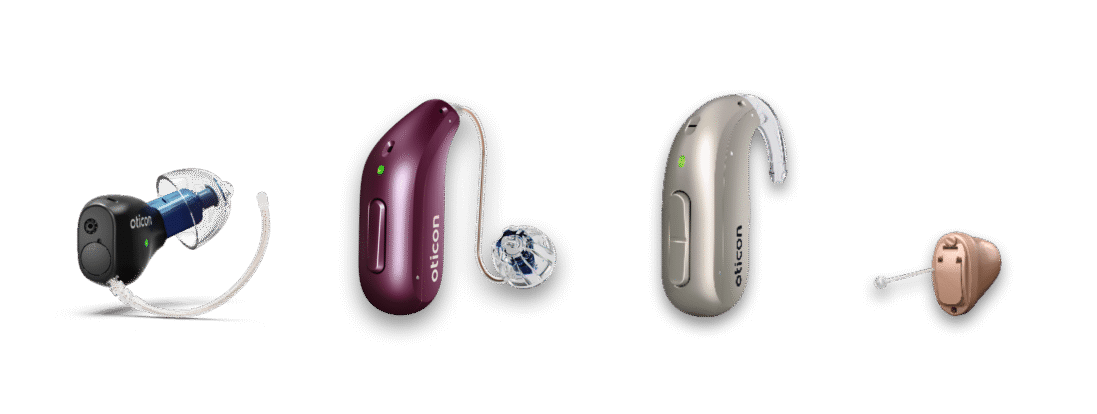
Different Hearing Aid Styles
Prescription Hearing aids typically are grouped into two categories: In-The-Ear and Behind-The-Ear.
Prescription hearing aids are available in a variety of styles, sizes and configurations. There is no single style that is best for everyone. The most appropriate style depends on your hearing loss, ear anatomy, listening needs and personal preferences.
When recommending a hearing aid style, we consider factors such as:
- Type and degree of hearing loss
- Manual dexterity and vision
- Shape and size of the ear and ear canal
- Medical or anatomical considerations
- Lifestyle and listening needs
- Skin sensitivities
- Connectivity and rechargeable options
- Appearance and discretion preferences

In-The-Ear Styles (i.e. Custom Styles)
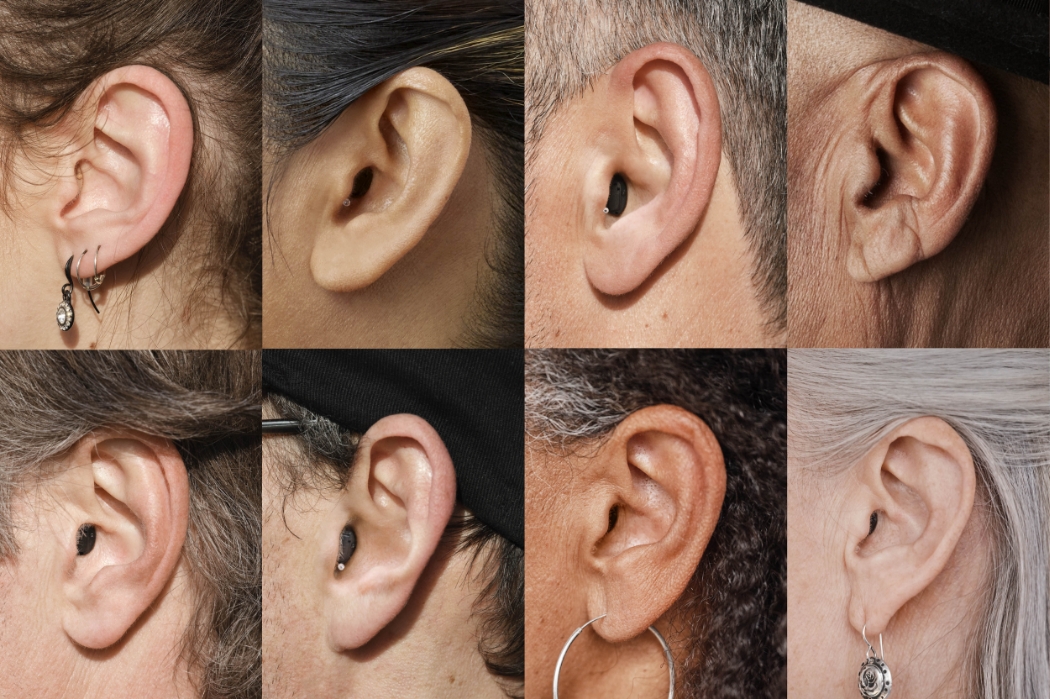
In-the-ear hearing aids contain the hearing aid components within the ear or ear canal. Traditional styles are custom-made from a precise 3D scan or silicone impression of your ear, while newer designs are also available that do not require a custom-manufactured shell.
Styles range from extremely small devices positioned deep in the ear canal to larger devices that fill more of the outer ear.
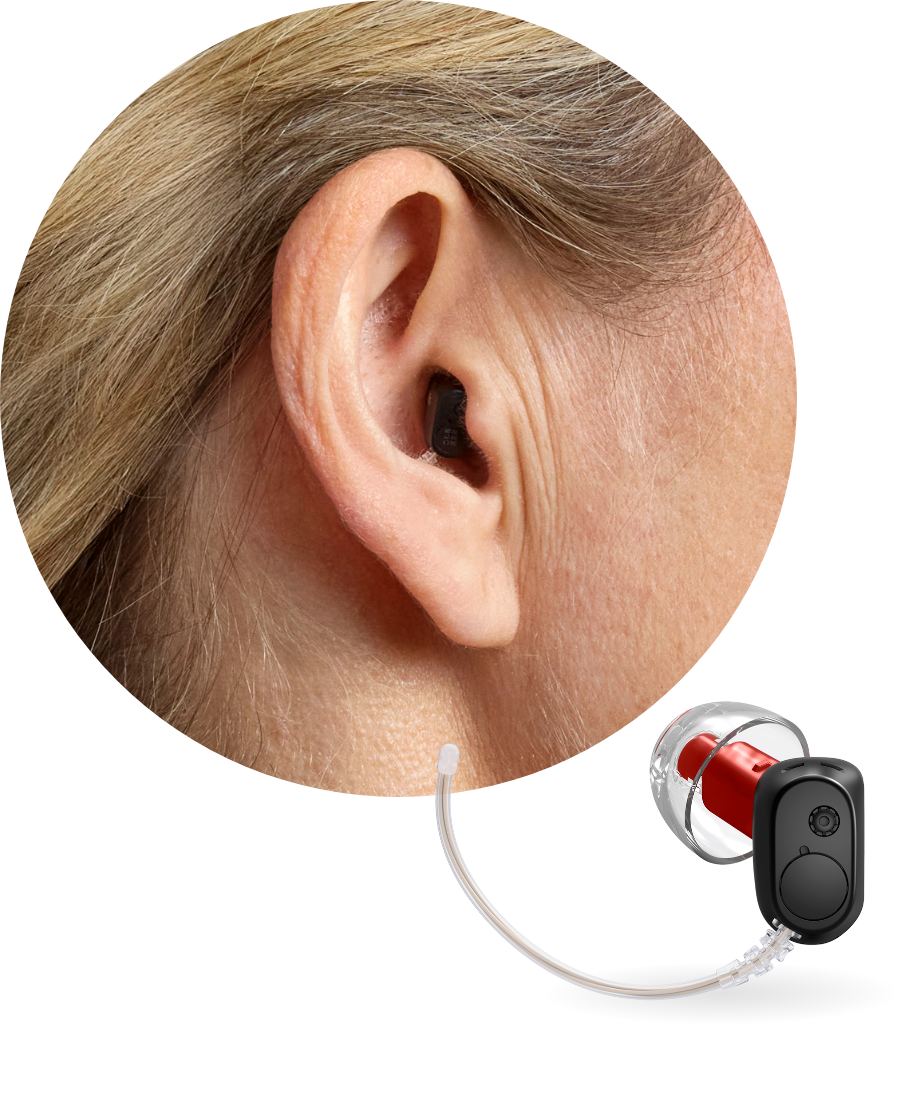
NXT IN-THE-EAR
For mild to moderately-severe hearing loss, NXT is a newer style that sits discreetly in the ear canal without a traditional custom-manufactured shell. It offers Bluetooth connectivity and rechargeable, all-day power in an in-ear design.
Typically appropriate for mild to moderately-severe hearing loss.
- Appearance: Very discreet, with nothing positioned behind the ear.
- Fit: Uses a replaceable earpiece or custom-made earpiece.
- Technology: Offers many of the advanced features traditionally found in larger hearing aids.
- Connectivity: Bluetooth connectivity, including Bluetooth LE Audio and Auracast™.
- Power: Rechargeable with all-day battery life.
- Handling: Larger than the smallest custom styles, making insertion and removal relatively easy.
- Considerations: Suitability depends on your hearing loss and individual ear anatomy.
Note: Suitability depends on your hearing loss and individual ear anatomy.
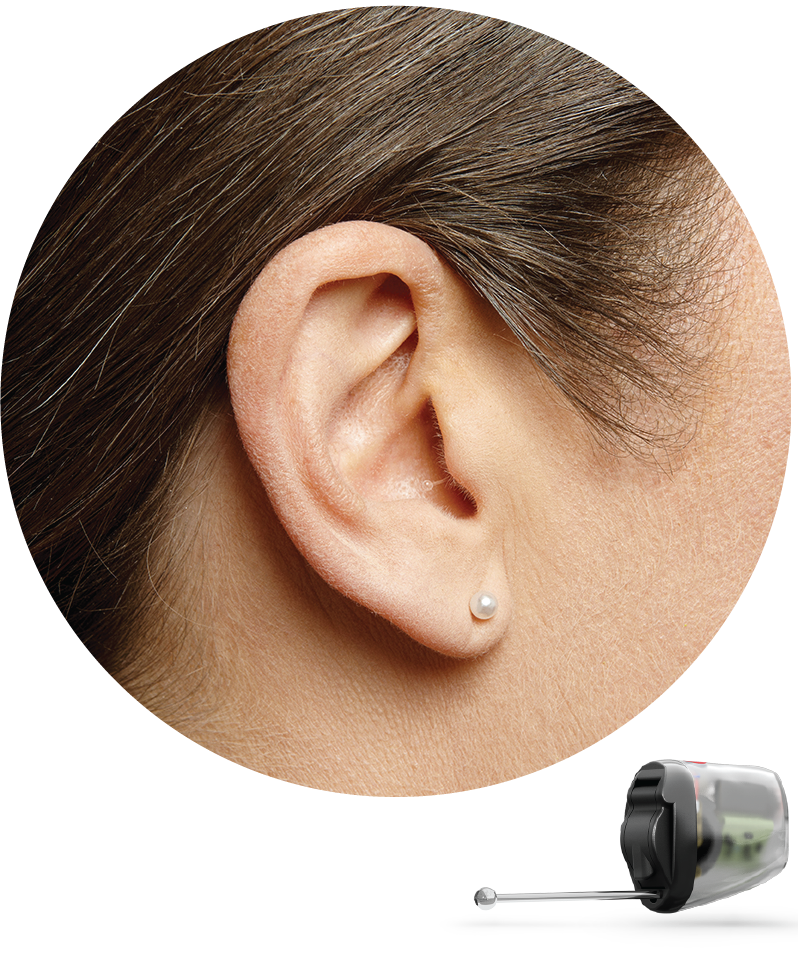
INVISIBLE IN THE CANAL (IIC)
For mild to moderately-severe hearing losses, the IIC is the ultimate in discretion. The entire hearing aid fits deep in the ear canal making it completely invisible in most ears.
Typically appropriate for mild to moderately-severe hearing loss.
- Appearance: The most discreet traditional custom hearing aid style.
- Fit: Custom-made specifically for the shape of your ear canal.
- Technology: Uses the natural shape of the outer ear to collect sound.
- Connectivity: Typically does not offer wireless connectivity.
- Power: Uses small disposable hearing aid batteries.
- Handling: Its very small size can make insertion, removal and battery changes more difficult.
- Considerations: Requires adequate ear canal size and anatomy.
Note: This style of hearing aid is only appropriate for certain hearing losses and certain ear canals.
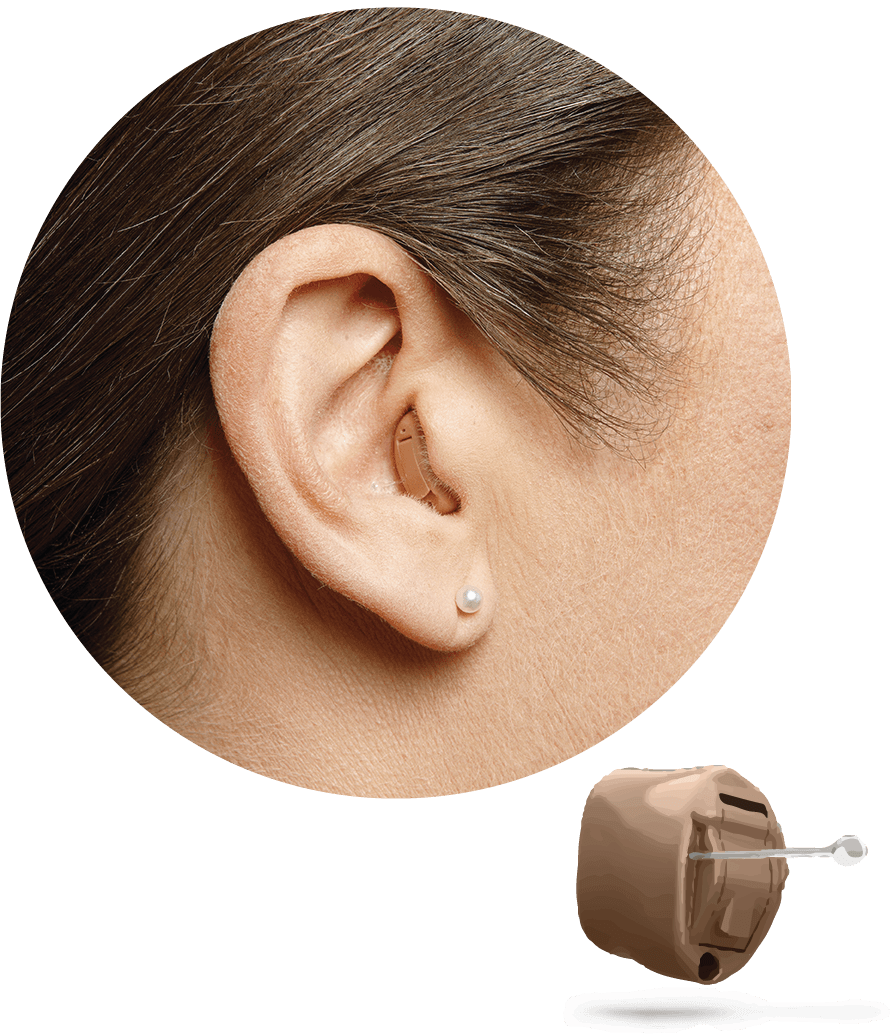
COMPLETELY IN THE CANAL (CIC)
A Completely-in-the-Canal, or CIC, hearing aid is slightly larger than an IIC but still fits almost entirely within the ear canal.
Typically appropriate for mild to moderately-severe hearing loss.
- Appearance: Very discreet, with nothing positioned behind the ear.
- Fit: Custom-made specifically for the shape of your ear canal.
- Technology: May accommodate slightly more power and features than an IIC.
- Connectivity: Wireless connectivity may be limited depending on the model.
- Power: Typically uses disposable hearing aid batteries.
- Handling: Slightly easier to insert and remove than an IIC.
- Considerations: Requires adequate ear canal size and anatomy.
CIC hearing aids provide a balance between a very discreet appearance and slightly greater flexibility than the smallest IIC style.
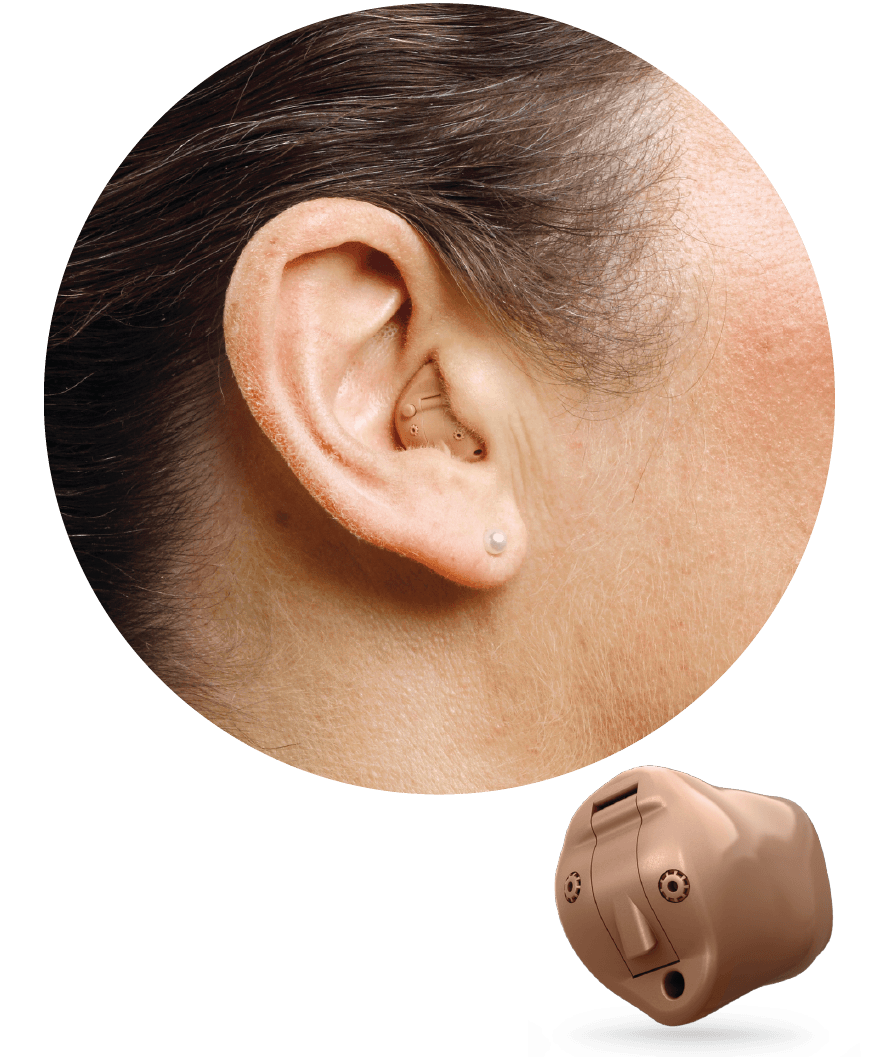
IN THE CANAL (ITC)
An In-the-Canal, or ITC, hearing aid sits partly within the ear canal and extends into the lower portion of the concha, or bowl of the outer ear.
Typically appropriate for mild to severe hearing loss, depending on the model.
- Appearance: More visible than an IIC or CIC, but still contained entirely within the ear.
- Fit: Custom-made specifically for the shape of your ear.
- Technology: Can accommodate directional microphones, manual controls and additional features.
- Connectivity: Wireless connectivity is available in many models.
- Power: Rechargeable and disposable-battery options are available.
- Handling: Easier to insert, remove and operate than smaller custom styles.
- Considerations: Its larger size provides more flexibility for power and features.
ITC hearing aids can provide an excellent balance of discretion, technology and ease of handling.
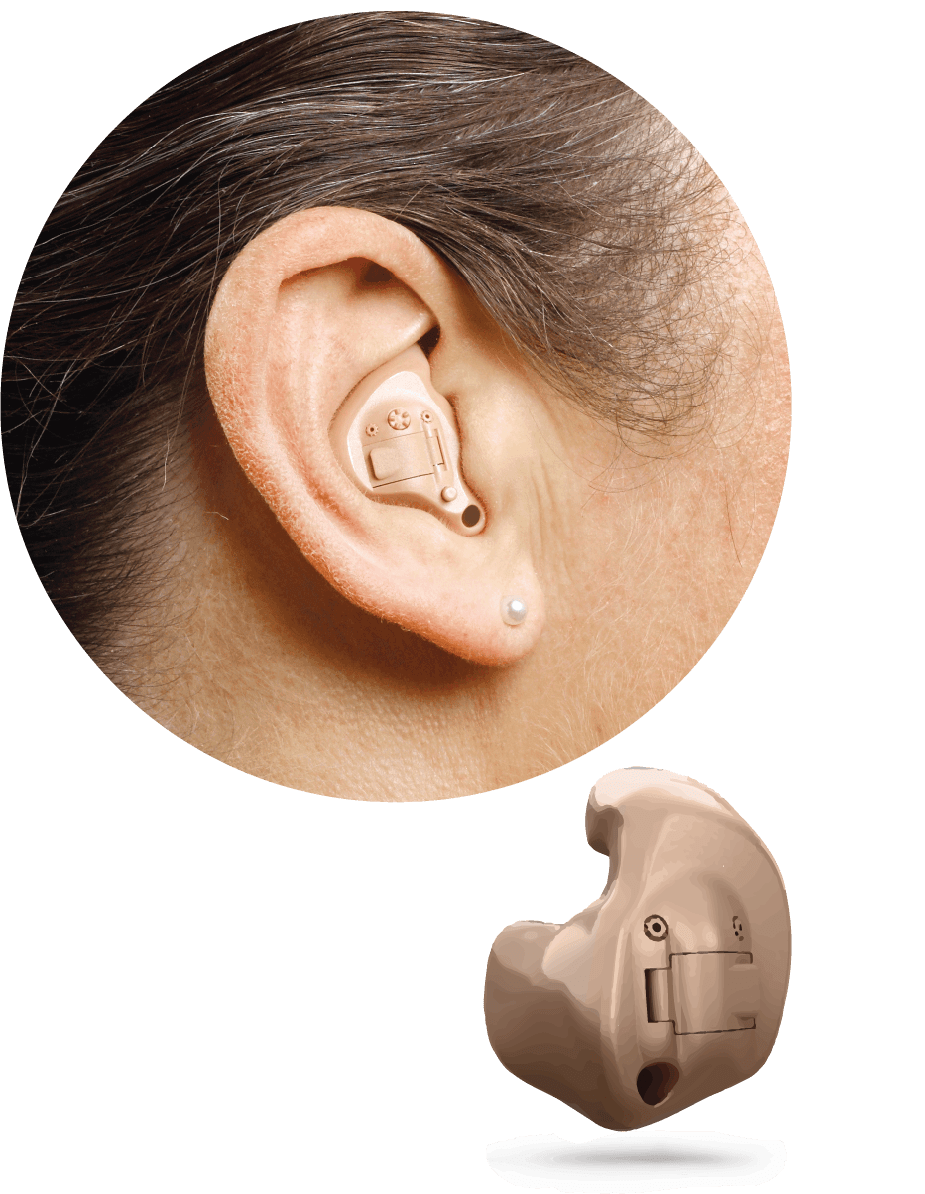
IN THE EAR (ITE) OR FULL SHELL
An In-the-Ear, or ITE, hearing aid fills most or all of the concha, or bowl of the outer ear. Its larger size provides more room for amplification, microphones, controls and other technology.
Typically appropriate for mild to severe hearing loss, depending on the model.
- Appearance: The largest in-the-ear style, with nothing positioned behind the ear.
- Fit: Custom-made specifically for the shape of your ear.
- Technology: Can accommodate greater amplification, directional microphones and manual controls.
- Connectivity: Wireless connectivity is available in many models.
- Power: Rechargeable and disposable-battery options are available.
- Handling: Larger size makes insertion, removal and controls easier to manage.
- Considerations: Can provide greater power and flexibility than smaller custom styles.
ITE hearing aids are often a good choice for individuals who prefer an all-in-the-ear design but require more power, features or easier handling.
Behind-The-Ear Styles
Behind-the-ear hearing aids place most of the hearing aid electronics behind the outer ear. Sound is delivered into the ear canal through either a thin wire or tubing. The earpiece may be a small universal dome or a custom-made earmold depending on your hearing loss and ear anatomy. These styles are extremely versatile and are generally more flexible and reliable than in-the-ear hearing aids.
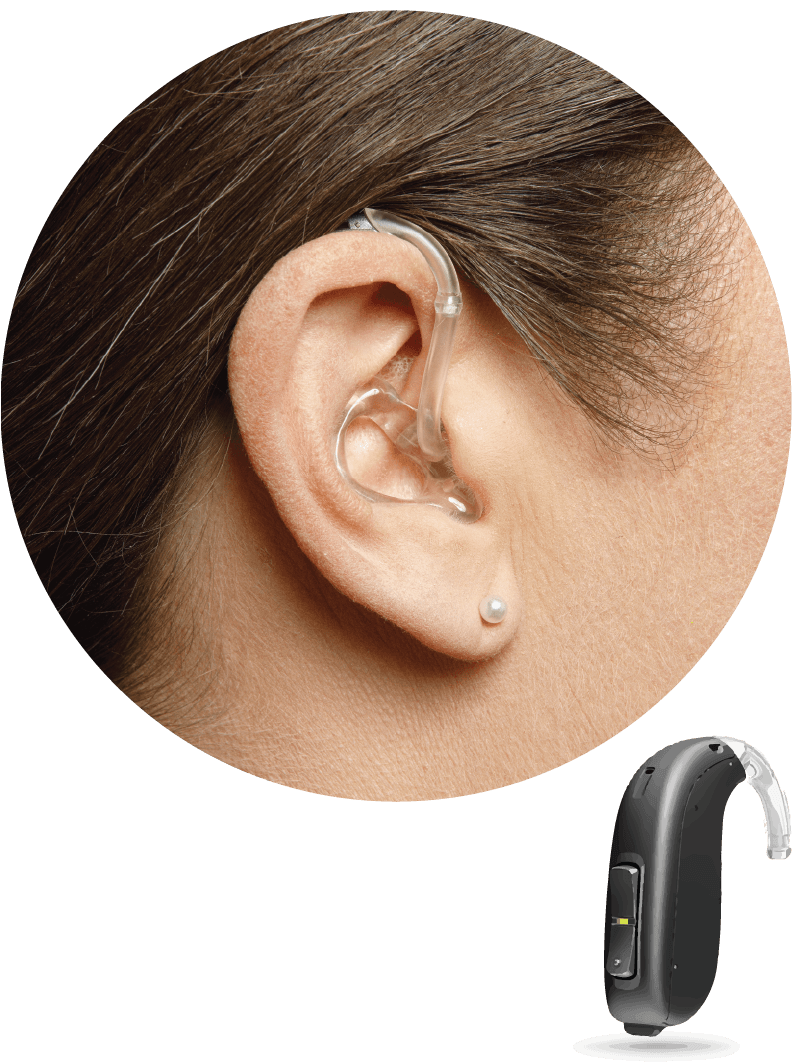
BEHIND THE EAR (BTE)
A traditional Behind-the-Ear, or BTE, hearing aid places the hearing aid behind the ear. Sound travels through tubing into an earpiece, most commonly a custom-made earmold.
Appropriate for mild to profound hearing loss.
- Appearance: Larger behind-the-ear design.
- Fit: Most commonly used with a custom-made earmold.
- Technology: Can provide the greatest range of amplification and advanced hearing aid features.
- Connectivity: Wireless connectivity is available in many models.
- Power: Rechargeable and disposable-battery options are available.
- Handling: Larger size can make insertion, removal and controls easier to manage.
- Considerations: Extremely durable and reliable because there are no electronic components positioned within the ear canal.
BTE hearing aids are particularly well suited for individuals who require greater amplification, increased durability or an easy-to-handle hearing aid.
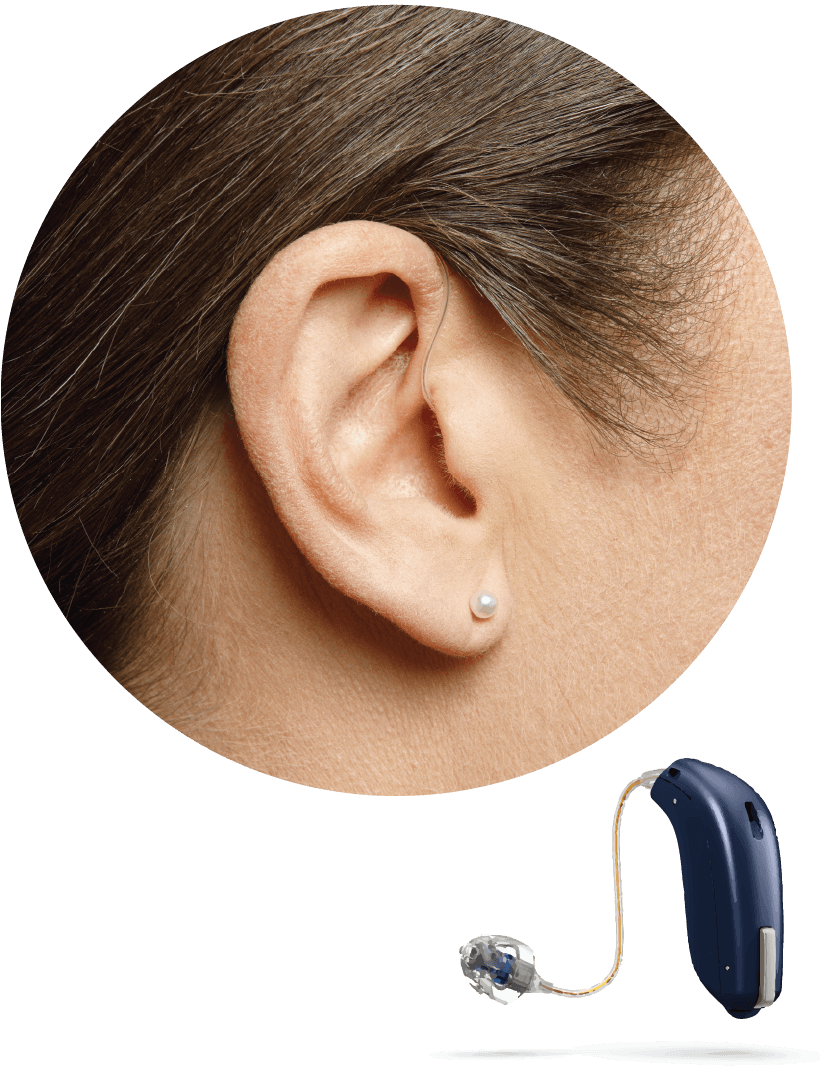
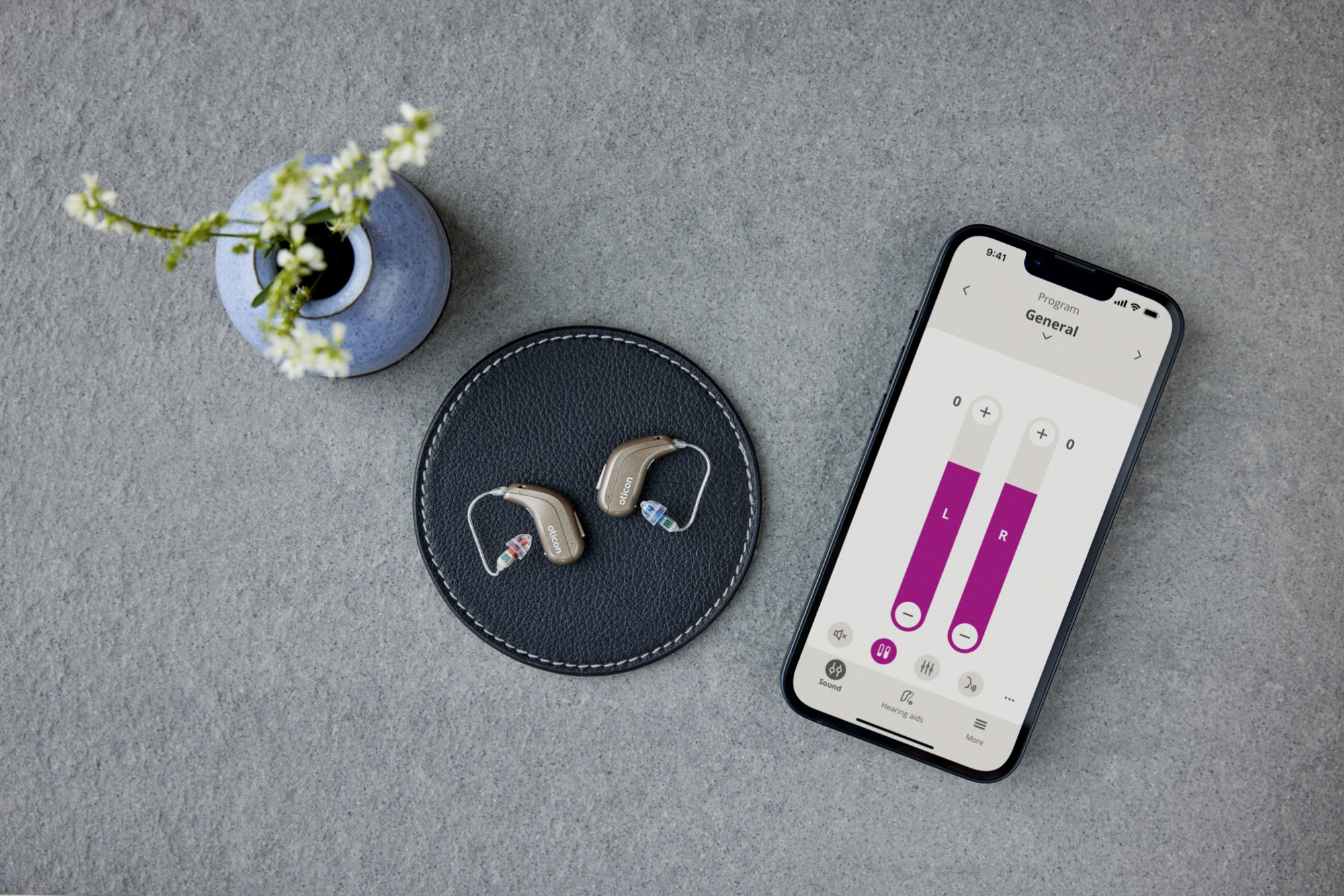
RECEIVER IN THE EAR/CANAL (RITE/RIC)
Receiver-in-the-Ear (RITE) and Receiver-in-Canal (RIC) hearing aids are the most commonly prescribed hearing aid style today. A small hearing aid sits behind the ear and connects by a thin wire to a miniature speaker, called the receiver, positioned in the ear canal.
Appropriate for a very broad range of mild to severe hearing losses.
- Appearance: Small and discreet, with only a thin wire visible beside the ear.
- Fit: Can use a small universal dome or a custom-made earpiece.
- Technology: Accommodates advanced directional microphones, noise management and other modern features.
- Connectivity: Extensive wireless connectivity with smartphones, televisions and other devices.
- Power: Rechargeable models are widely available.
- Handling: Generally easy to insert, remove and operate.
- Considerations: Highly flexible and can be adapted as hearing needs change.
RIC/RITE hearing aids combine a discreet design with excellent flexibility, connectivity and technology, making them one of the most versatile hearing aid styles available.
Common Features in Modern Hearing Aids
We will help you compare features and technology levels to find the right fit for your needs and lifestyle.
Modern hearing aids include advanced features designed to improve comfort, clarity, and convenience throughout your day. Depending on the style and technology selected, features may include:
- Rechargeable Battery Options
- Smartphone App Controls
- Bluetooth Connectivity For Cell Phones And Other Devices
- Automatic Listening Environment Adjustments
- TV And Audio Streaming Options
- AI-Powered Sound Processing
- Background Noise Reduction
- Speech Enhancement Technology
- Directional Microphones
- Wind And Sudden Noise Reduction
- Feedback And Whistling Reduction
- Tinnitus Support Features
- Remote Care and Virtual Adjustments
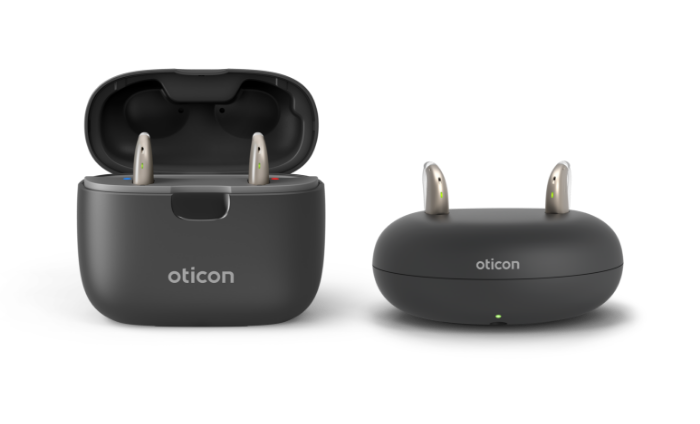
Rechargeable Hearing Aids
Rechargeability is not a specific hearing aid style. It is a power option available in many modern hearing aids. Rather than replacing small disposable batteries every few days, rechargeable hearing aids are placed in a charger when they are not being worn.
- Designed to provide a full day of typical hearing aid use
- Simple overnight charging
- No small disposable batteries to change
- Helpful for people with reduced dexterity or vision
- Many chargers provide additional portable charging capacity
- Available in an increasing number of hearing aid styles
Your hearing care provider can help determine whether a rechargeable or disposable-battery hearing aid is the better choice for your individual needs.
Hearing Aid Technology
Prescription hearing aids are Class II medical devices classified by their level of technology. More advanced models offer greater support to the damaged auditory system, improving the brain’s access to speech and environmental sounds. As technology progresses, modern digital hearing aids provide increasingly sophisticated sound processing, enhancing speech clarity and adapting more effectively to changing acoustic environments. While hearing aids do not restore normal hearing, they maximize the auditory system’s remaining function to improve communication and overall hearing ability. Following a diagnostic hearing assessment, our hearing healthcare team will help you explore the best hearing aid options for your needs.

Which Hearing Aid Style Is Right for Me?
Choosing a hearing aid involves much more than deciding which device looks best. The right hearing aid must appropriately treat your hearing loss, fit comfortably, and provide the features you rely on in everyday life.
Following a comprehensive diagnostic hearing assessment, your hearing care provider will walk you through the styles that suit your hearing loss, ear anatomy, lifestyle, and personal preferences.
At our hearing clinic, every hearing aid is individually selected, prescribed, programmed, and verified to ensure the technology is the right match for your hearing and communication needs.